Sailing & marine systems Available
Telltale ↗
Our wind and wave models, tested against evidence. Boat-specific routing built on that foundation.
 WAYFARER LABSContact ↗
Independent engineering studio · Switzerland
Explore the products we build, the questions they answer and the work behind them.
Decades of experience across computer science, data science and product development.
Meet the creator ↗Sailing & marine systems Available
Our wind and wave models, tested against evidence. Boat-specific routing built on that foundation.

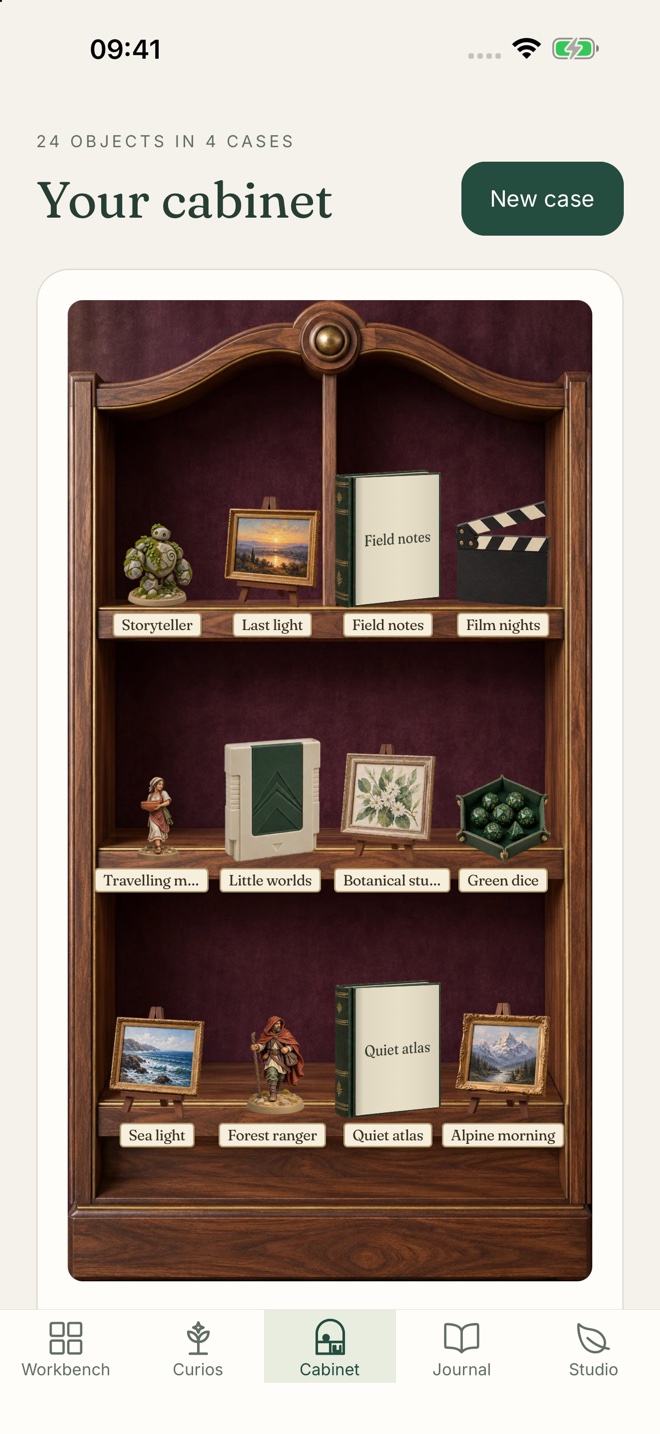
 APP CAPTURE + CABINET PREVIEW
Collections & making Available
Keep your hobbies, collections and creative projects connected.
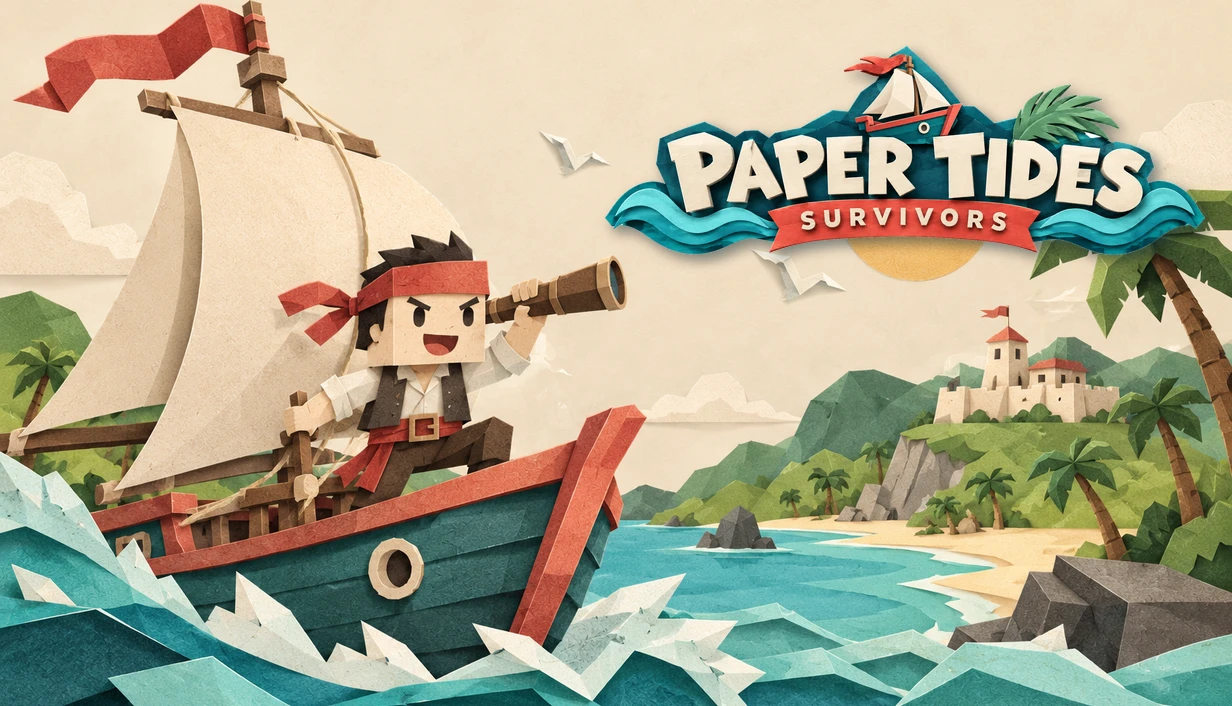 ILLUSTRATED KEY ART · IN TESTING
Games & interactive systems In testing
Paper Tides, Corporate Survivors and Dead End Department.
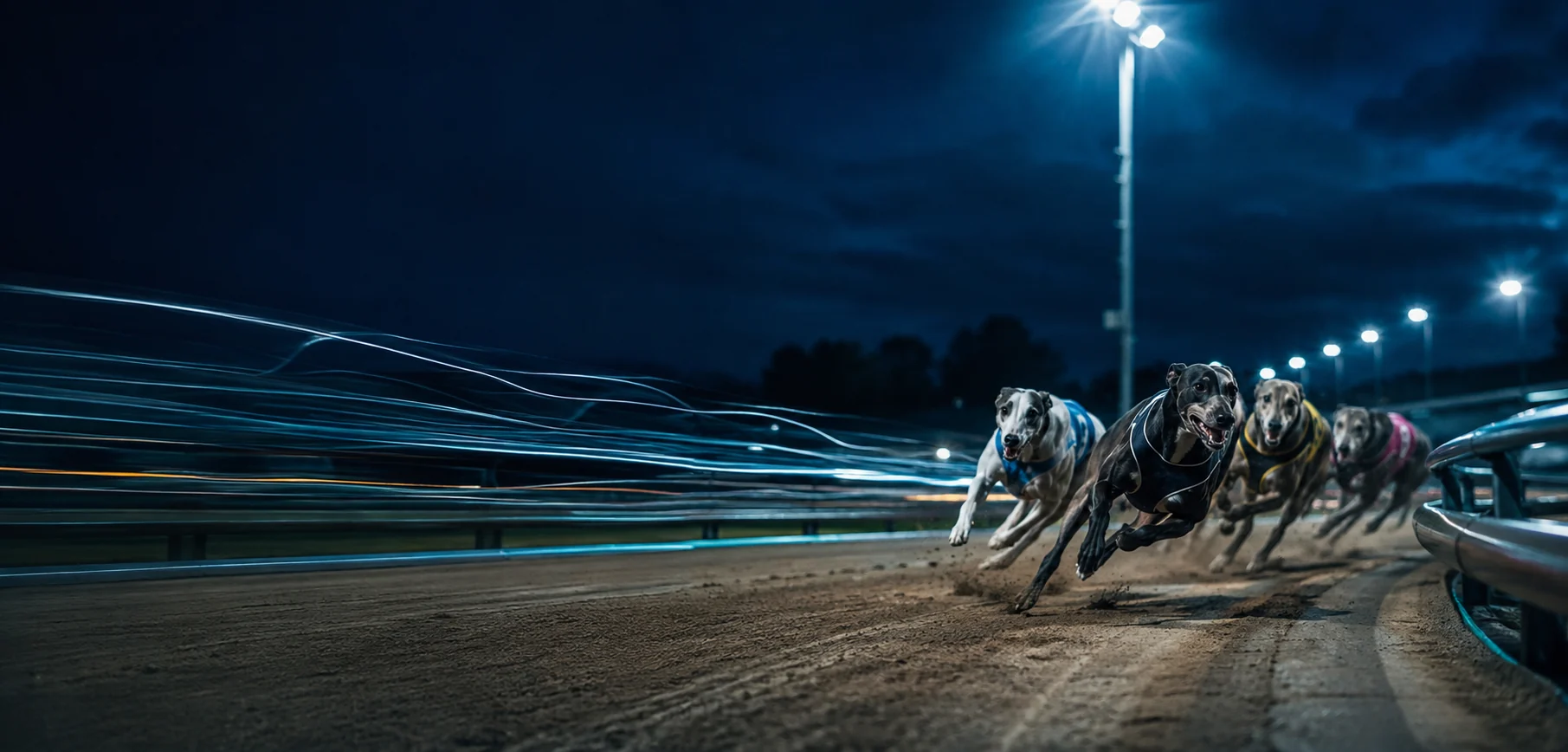 HOUNDHUNT · BRAND ARTWORK
Predictive modelling Available / private beta
Racing probabilities, the supporting data and the recorded outcomes.
About Wayfarer Labs

Independent engineering · Switzerland
Wayfarer Labs is built on decades of experience turning complex science and data into practical systems. Its creator holds a PhD in computer science and brings extensive director-level experience at a global healthcare company, leading work across strategic intelligence, data science and product development.
That work connects clinical science and operations with portfolio management, finance, manufacturing, regulatory affairs and patient advocacy. It uses digital twins, predictive engines and decision intelligence to understand complex systems, anticipate outcomes and support better decisions.
The same discipline shapes what we build here: make assumptions explicit, test predictions against reality, and give people information they can act on. For our marine systems, that means taking the work aboard boats, where real passages put the models, software and hardware to the test.
Telltale / Sailing intelligence
Our coastal wind and wave models combine physics with data science. Boat-specific routing, anchorage assessment and connected instruments put those fields into the context of your passage.
Explore Telltale ↗Actual application renderer · saved model output, 23–24 October 2026 · not a live forecast.
Games / HELP
Find setup instructions, understand a feature or report a problem.
Race research / Greyhounds
Research Australian greyhound racing with Sergio, our in-house prediction model. Bring form, sectionals and race conditions together, then examine the evidence behind each assessment.
Open HoundHunt ↗HOW IT WORKS
Form, sectionals, track conditions and market history available before the race.
The same feature path serves model training and inference. Calibration is tracked by version.
Compare probabilities with results across the full sample, including losses.
Method & evaluation
Preserve the information cutoff, model version, predicted probability and available price. After settlement, inspect calibration, sample size and drift alongside returns. Time-ordered evaluation keeps later races separate from earlier training data.
Research and educational analytics. Probabilities do not guarantee outcomes. 18+.
Race research / Thoroughbreds
Sergio Thoroughbred combines form, sectional times, race conditions and weather for Australian and New Zealand racing. A dedicated model, within the shared HoundHunt research workspace.
Open HoofHunt · invited users ↗SYSTEM OVERVIEW
Inputs and assumptions remain attached to the result.
HOW IT WORKS
Recent form, sectionals, barriers, distance and class changes.
The going and weather add context to a runner’s history.
Race probabilities, market comparisons and settled results remain connected.
Method & evaluation
Sergio-T is a dedicated thoroughbred model. Its evaluation needs its own races, reference periods and outcomes. Results from greyhound racing are not evidence of performance on thoroughbreds.
Private research beta for invited HoundHunt users. No public subscriptions. 18+.
Marine hardware / Cooling, defrost & airflow
A retrofit controller designed to manage refrigeration automatically, coordinating compressor effort, intelligent defrosting and air circulation. Use temperature feedback and available power to maintain the required cooling while reducing avoidable energy use.
Discuss your installation ↗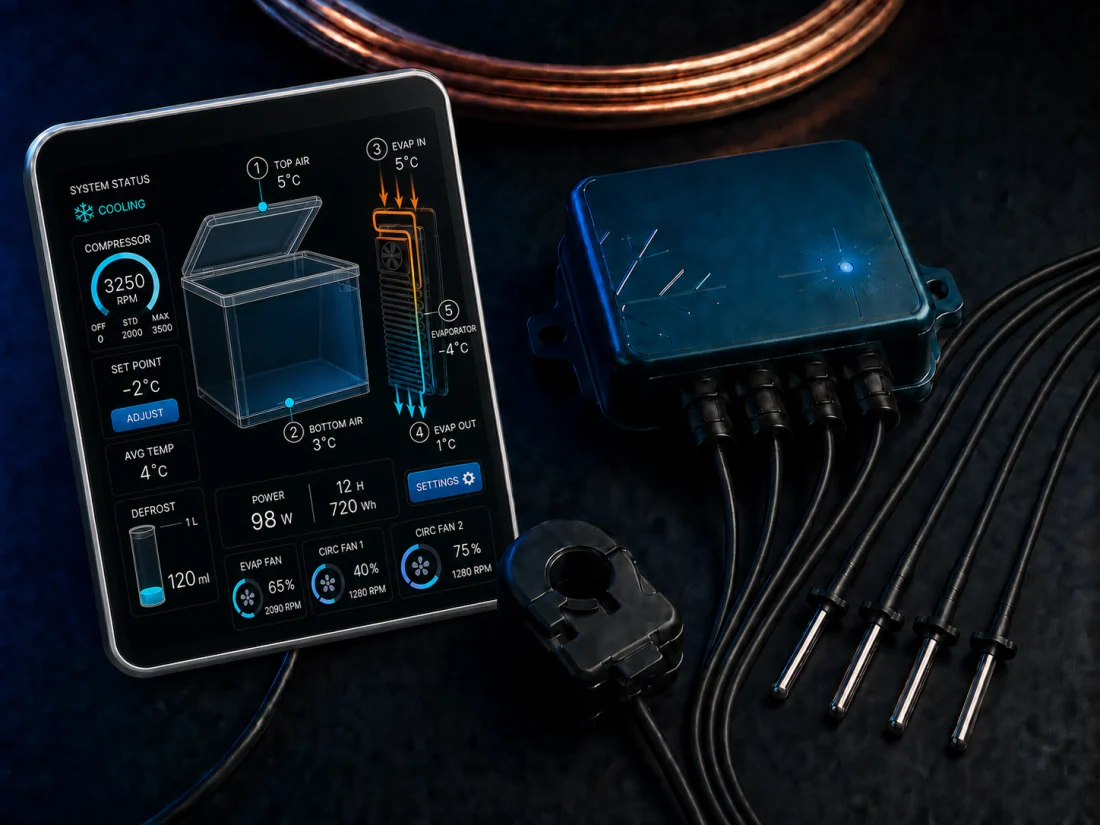
HOW IT WORKS
Five temperature points across the box, evaporator and airflow.
Coordinate compressor speed, defrost cycles and fan speeds within the configured temperature limits.
Schedule cooling around available power, with local control and optional Telltale integration for the boat’s energy budget.
Development & evidence
Initial integration targets Danfoss BD35 and BD50 compressors. The display brings temperature, power, energy and defrost information together. Savings must be established by comparing equivalent cooling work under measured conditions.
Development proposal. No measured energy-saving percentage is claimed.
SYSTEM OVERVIEW
Thermal feedback closes the loop.
Telltale adds energy context when connected.
Marine hardware / Windlass & thruster
A wireless handheld and base station for anchoring. Chain length, depth, scope and seabed context sit together, while the original footswitches and wired controls remain available.
Discuss compatibility ↗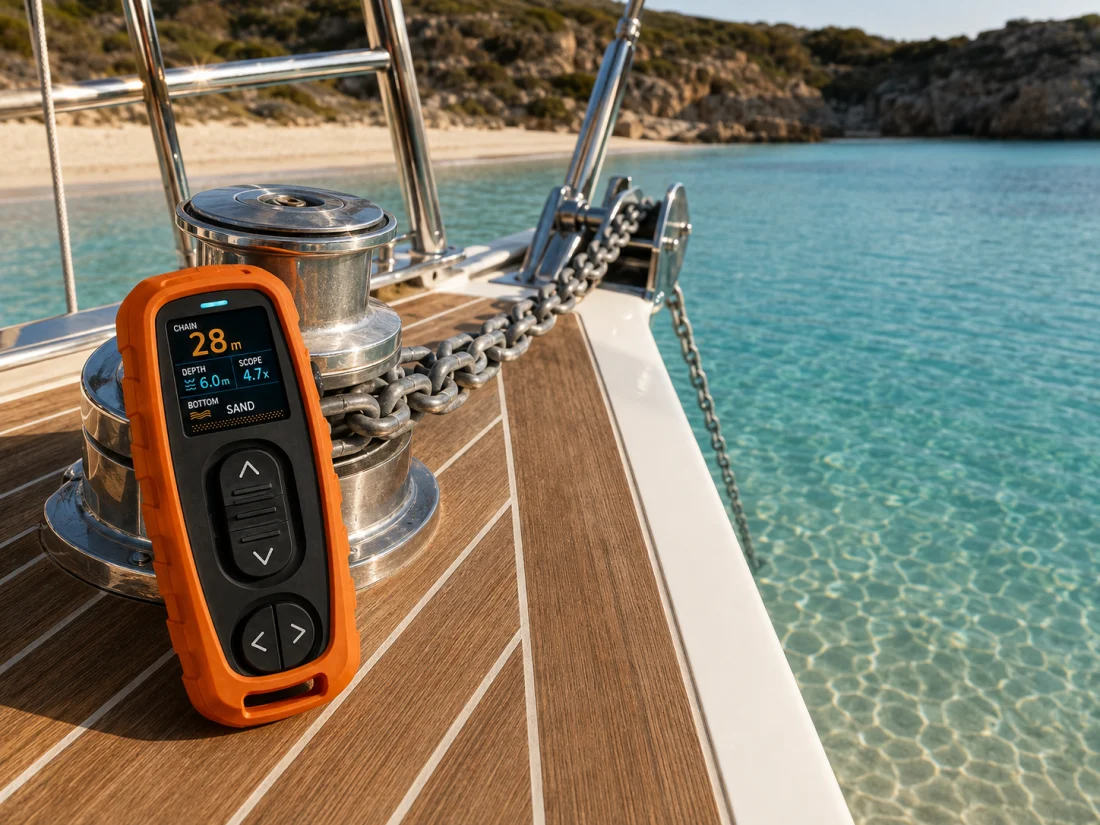
HOW IT WORKS
Distinct physical controls for windlass and bow thruster.
Chain count follows movement from the handheld or the boat’s original controls.
Measured chain length can feed the anchor watch and voyage log.
Development & evidence
The proposed architecture preserves the boat’s original controls. The fitted trial must verify command response, chain count and coexistence across both control paths. Standalone operation does not require an app or server.
In development. Fitted acceptance testing remains part of the release work.
PROPOSED CONTROL PATH
Original wired controls → windlass
Independent command path remains available.
Marine hardware / Machine vision
A stabilised thermal and daylight camera concept. Combine viewing angles with mast height and vessel attitude to estimate where a water-level contact lies.
Discuss the prototype ↗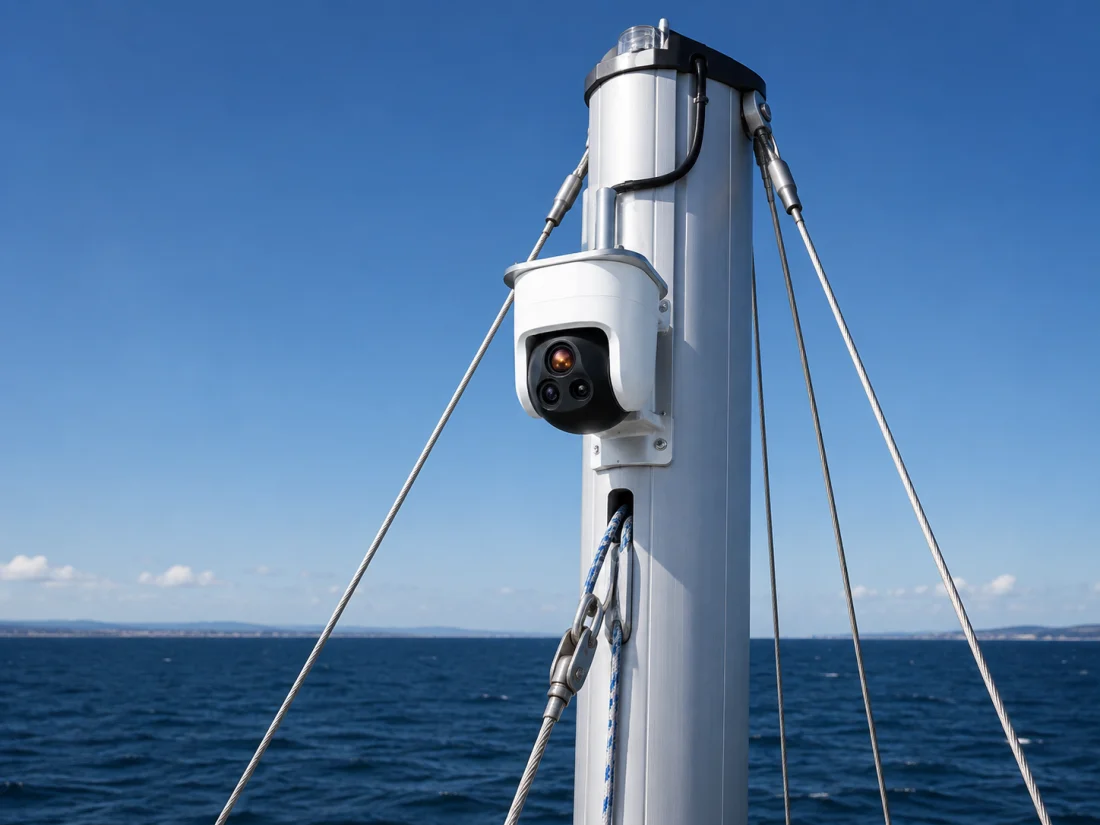
HOW IT WORKS
Thermal and daylight imagery from a stabilised masthead pod.
Mast height and corrected viewing angle estimate water-level range.
Telltale supplies heading, position and attitude for chart-referenced contacts.
Development & evidence
Passive ranging depends on the contact being at water level and on the accuracy of height and viewing angle. A near-horizontal sightline is particularly sensitive to angle error. The proposed laser rangefinder provides another measurement at suitable ranges.
Prototype programme. Published specifications are design targets until verified on a fitted unit.
MEASUREMENT CHAIN
r = h / tan(α)
Idealised water-level geometry, after attitude correction.
Joint development / Myto AG
An early-stage product developed with Myto AG. The work is independent of Telltale. Product features and release timing have not been announced.
Contact the lab ↗SYSTEM OVERVIEW
Inputs and assumptions remain attached to the result.
HOW IT WORKS
Establish the problem and the evidence needed.
Test the proposed approach with the development partner.
Release a specification when the evidence is ready.
Development & evidence
EvenKeel has its own development programme. This page provides a clear status and contact route without filling the gaps with speculative features.
Prototype with Myto AG. No public release date.
Collections, projects & making
A personal studio for hobbies, collections and creative projects. Keep records, photographs, methods and supplies together, from the first idea to the finished piece.
View on the App Store ↗Curious? Explore Curio Studio ↗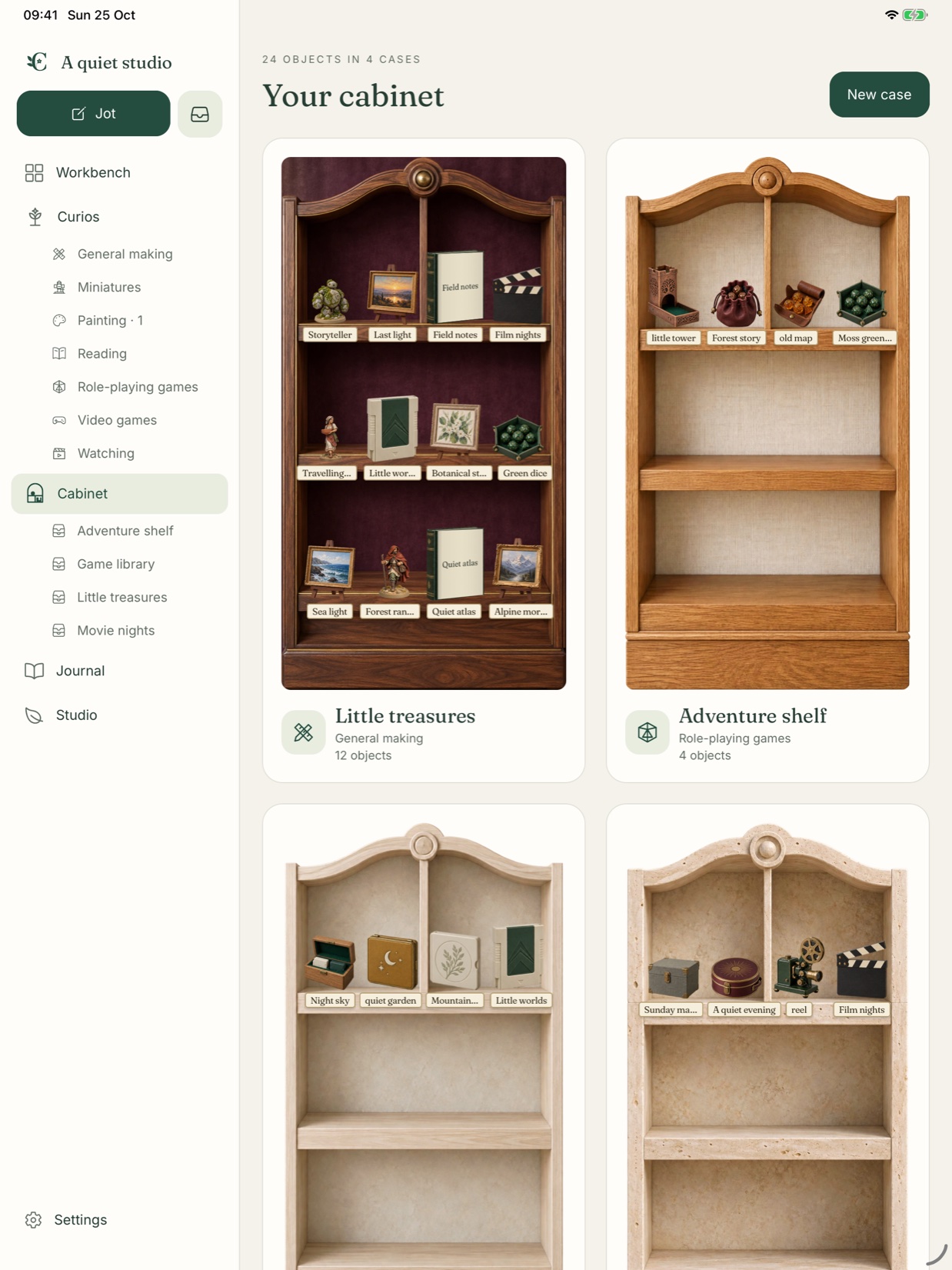
HOW IT WORKS
Development & evidence
Optional iCloud sync connects your own Apple devices. Complete backup exports include records and photographs. The support pages explain backup, recovery and app-lock behaviour before you need them.
iPhone and iPad. See the App Store for current availability and requirements.
The complete portfolio
Software, research, hardware and games. Each product has its own purpose, evidence and development status.
 Available
Wind and wave models, with boat-specific routing.
 Available
Collections, projects & making
 In testing
Paper worlds and interactive systems.
 Available
Race research / Greyhounds
 Private beta
Race research / Thoroughbreds
 In development
Marine hardware / Cooling, defrost & airflow
 In development
Marine hardware / Windlass & thruster
 Prototype
Marine hardware / Machine vision
 Prototype
Joint development / Myto AG
Explore three games in development. See how each one plays and ask about joining the beta.
Sailing survivor rogueliteSteer through the fight while the cannons fire.
Public TestFlight beta Workplace survivor roguelite
Clear a route through the office.
TestFlight testing Lane defence with movable formations
Inspect the incoming threats and available budget.
TestFlight testingIllustrated key art above. Each game page includes a development gameplay capture.
Sailing survivor roguelite / Public TestFlight beta
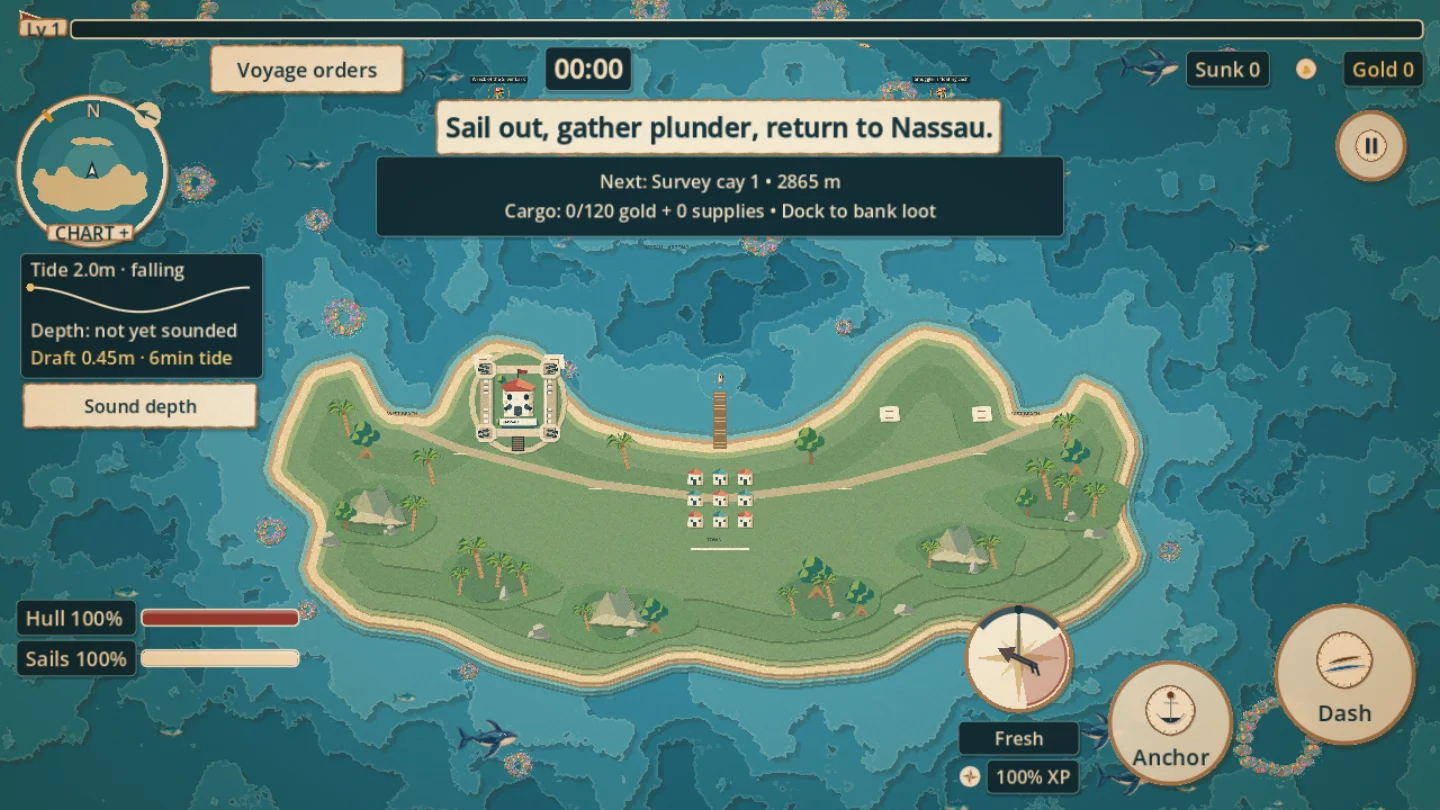
Steer a paper ship through enemy fleets, line up broadsides and turn salvage into a vessel worth bringing home. Wind, tide and depth give the paper world a physical foundation.
Ask about the beta ↗Steer through the fight while the cannons fire.
Combine weapons, captain choices and refits.
Bank your haul and prepare for the next expedition.
iPhone and iPad beta. Steam for Windows, Steam Deck and Linux is planned.
Beta help →Workplace survivor roguelite / TestFlight testing
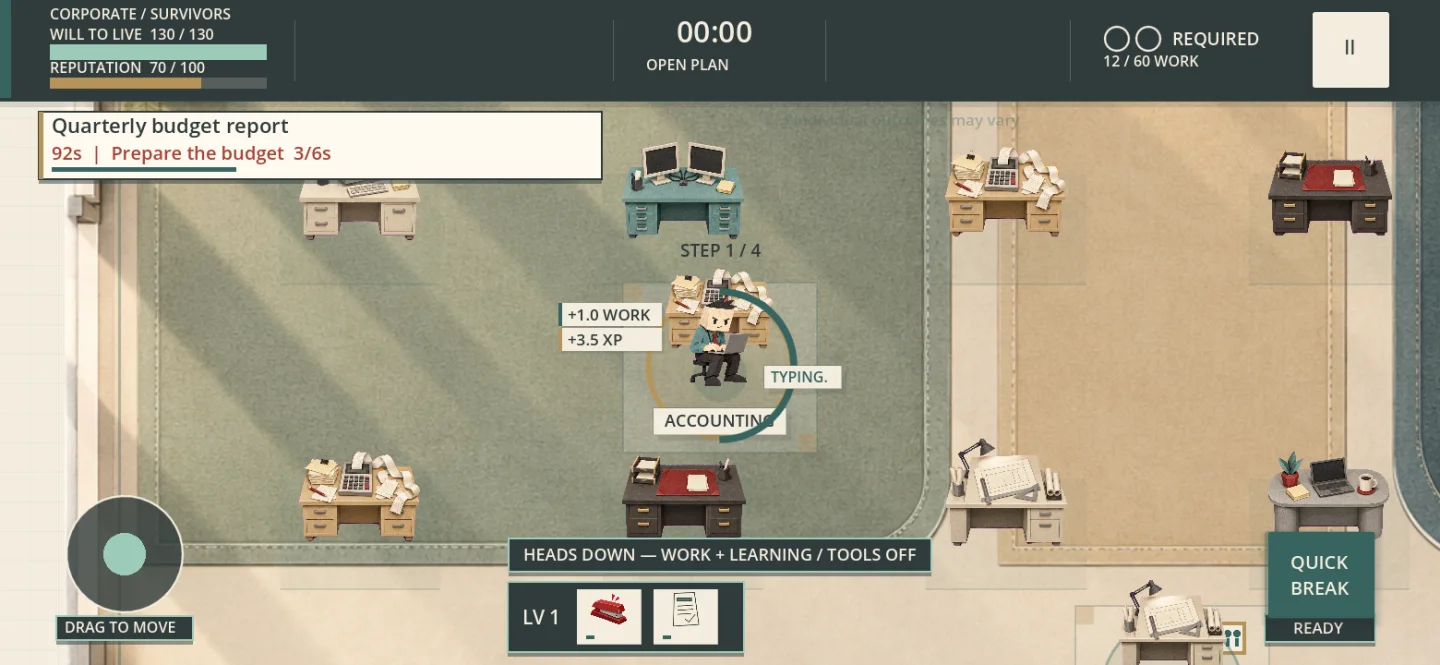
Fight through micromanagers and office chaos, then hold a quiet desk long enough to do useful work. Your personal attacks pause while you work, so every productive moment has a cost.
Ask about the beta ↗Clear a route through the office.
Reach the required workstations and complete the assignment.
Make the exit or risk a little overtime.
iPhone beta. PC and Steam Deck are planned.
Beta help →Lane defence with movable formations / TestFlight testing
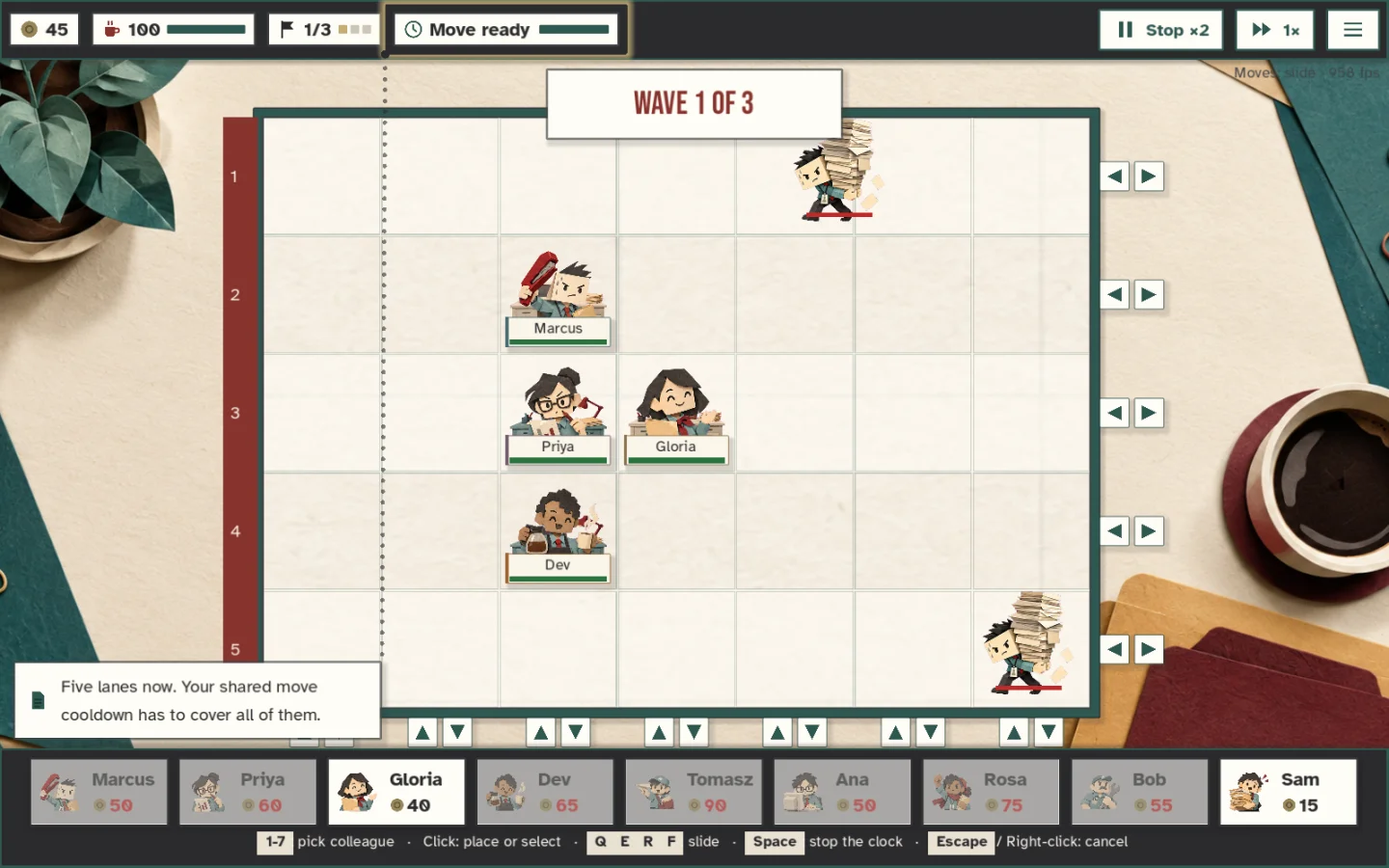
Build a team and rearrange its formation as management changes the battlefield. Moving one colleague can rescue a lane, restore a useful bond or expose the rest of the office.
Ask about the beta ↗Inspect the incoming threats and available budget.
Choose colleagues and neighbours that work together.
Move desks with a shared cooldown. Every rescue creates a tradeoff.
iPhone beta, with PC and Steam Deck development in progress.
Beta help →Wayfarer Labs / Methods across the portfolio
We work across numerical simulation, machine learning, sensing and embedded control. The common discipline is to represent the system carefully, preserve the evidence behind each output, and test it against the conditions it will encounter.
HoldFast / In development · fitted trial pending
Embedded systems · Event measurement · Control-path reliability
HoldFast connects a wireless control path to an existing windlass and thruster installation. The system must track what the equipment actually does, including when the boat’s original controls are used.
Commands, contactor response and chain-sensor events form related but distinct streams. Direction and physical movement determine the chain count. Depth and seabed context help interpret deployment; they do not replace measuring the rode.
Keep actuation and measured movement separate. Preserve the original wired control path, count movement from either command source, and test transitions and unavailable components. With Telltale, the measured chain length can inform anchor-watch geometry.
A handheld, under-deck base station and chain sensing provide standalone operation. Physical controls distinguish windlass and thruster functions; the display keeps chain, depth, scope and bottom context readable together.
A fitted trial must verify response, chain-count consistency and coexistence with the original controls. Latency should be measured at the contactor, with distance and obstructions recorded, rather than inferred from a wireless acknowledgement.
original wired controls and the added remote path
movement under either command source
fitted reliability and response record
No completed reliability sample or latency distribution is claimed here. The research question is dependable control and measurement, rather than a large machine-learning corpus.
Based on the HoldFast system architecture and fitted-trial criteria in the website source.
Dataset complexity & scale
A forecast cube, a race-history table and a stream of camera frames pose different problems. Volume matters alongside resolution, coverage, information timing, missingness and the independence of observations.
We distinguish source coverage, data actually processed, training samples and independent evaluation samples. Each published figure should carry its period, configuration and purpose.