WAYFARER LABSContact ↗

Meet the creator

Ben Geelan

I’m Ben. I design and build the products at Wayfarer Labs, and I sail the boat the marine products are tested on.

My background is in computer science, and most of it has been about measurement: collecting data from sensors and working out what it can reliably tell you. My PhD turned many messy biosignals into one real-time view of how people respond emotionally. As a postdoctoral researcher I helped establish a national wound monitoring application that used cameras to measure healing and produce new evidence on which treatments work best. I have also collaborated with CSIRO, Australia’s national science agency, on air quality and weather sensor data collected across the country.

For more than ten years I have led global teams in AI and advanced analytics. Today I am a senior director at a leading pharmaceutical company, a role separate from Wayfarer Labs. Since 2019 my work has been used in the launch of every new medicine the company has brought to patients, more than fifteen so far, and in several hundred clinical trials.

It has helped those trials finish sooner, and that matters because patients are waiting: the sooner a trial finishes, the sooner they can get a medicine that may change their lives. It has helped trials ask less of the patients who take part and detect serious side effects earlier. After approval it keeps helping, with monitoring side effects, managing other health conditions alongside treatment, and supporting patient communities. It has also contributed to lower costs for patients and society. Those medicines now reach millions of patients, and their families.

I am also a keen sailor. I cruise and race whenever I can, on real passages, in weather that does not always follow the forecast. Along the way I have built video games and educational software, and I still tinker with a bit of everything, with enough hobbies to sink a ship.

The approach is the same everywhere: state the assumptions, test predictions against what was measured, and build things people can use in practice.

Discuss a project ↗

Product support

What can we help with?

Find setup instructions, understand a feature or report a problem.

Race research / Greyhounds

HoundHunt

Available

A probability for every runner.
A record of every result.

Research Australian greyhound racing with Sergio, our in-house prediction model. Bring form, sectionals and race conditions together, then examine the evidence behind each assessment.

Open HoundHunt ↗
HoundHunt brand artwork

HOW IT WORKS

01

Point-in-time inputs

Form, sectionals, track conditions and market history available before the race.

02

Versioned inference

The same feature path serves model training and inference. Calibration is tracked by version.

03

Recorded outcomes

Compare probabilities with results across the full sample, including losses.

Method & evaluation

An assessment should survive scrutiny.

Preserve the information cutoff, model version, predicted probability and available price. After settlement, inspect calibration, sample size and drift alongside returns. Time-ordered evaluation keeps later races separate from earlier training data.

Research and educational analytics. Probabilities do not guarantee outcomes. 18+.

Race research / Thoroughbreds

HoofHunt

Private beta

Thoroughbred performance,
modelled in context.

Sergio Thoroughbred combines form, sectional times, race conditions and weather for Australian and New Zealand racing. A dedicated model, within the shared HoundHunt research workspace.

Open HoofHunt · invited users ↗

SYSTEM OVERVIEW

01FORM + SECTIONALS
02CONDITIONS + WEATHER
03SERGIO THOROUGHBRED
04PROBABILITY + OUTCOME

Inputs and assumptions remain attached to the result.

Method overview, not measured model performance

HOW IT WORKS

01

Performance history

Recent form, sectionals, barriers, distance and class changes.

02

Conditions at race time

The going and weather add context to a runner’s history.

03

Evaluate the prediction

Race probabilities, market comparisons and settled results remain connected.

Method & evaluation

The horse model has its own evidence.

Sergio-T is a dedicated thoroughbred model. Its evaluation needs its own races, reference periods and outcomes. Results from greyhound racing are not evidence of performance on thoroughbreds.

Private research beta for invited HoundHunt users. No public subscriptions. 18+.

Marine hardware / Cooling, defrost & airflow

ColdFront

In development

Coordinate cooling, defrost
and air circulation.

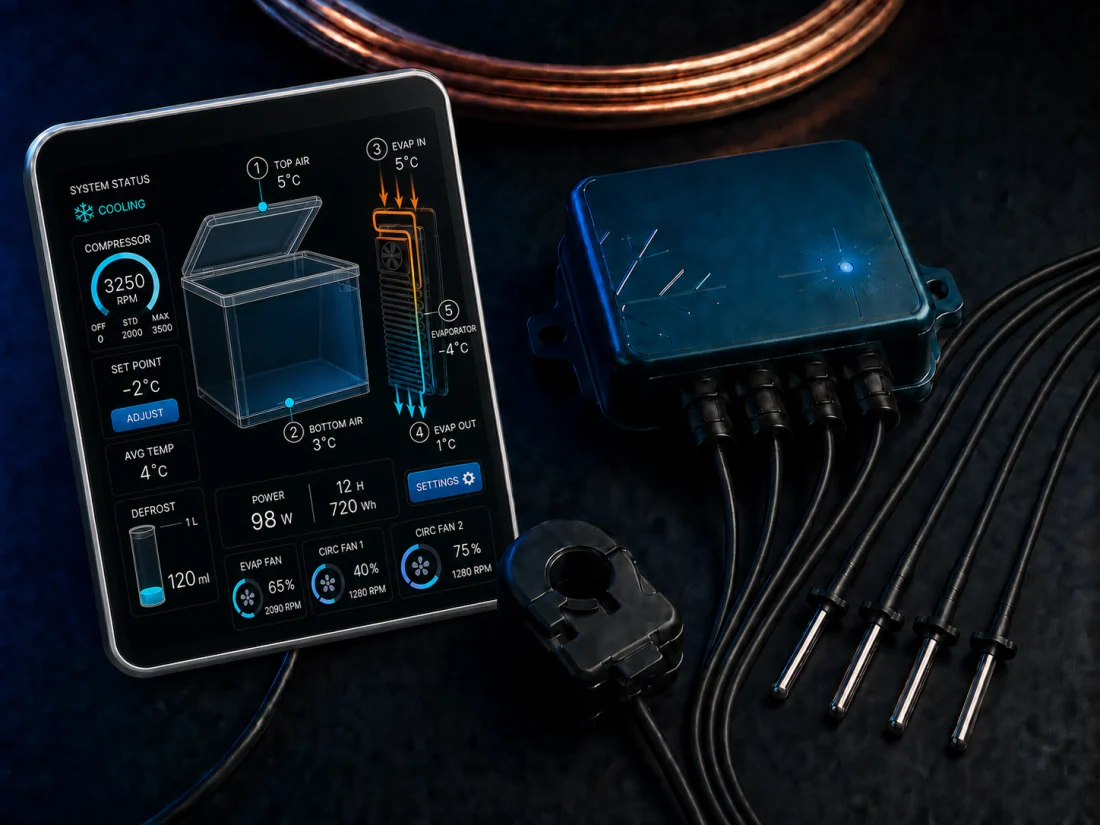
A retrofit controller designed to manage refrigeration automatically, coordinating compressor effort, intelligent defrosting and air circulation. Use temperature feedback and available power to maintain the required cooling while reducing avoidable energy use.

Discuss your installation ↗
Existing product concept visual · development hardware

HOW IT WORKS

01

Measure the thermal system

Five temperature points across the box, evaporator and airflow.

02

Control the cooling work

Coordinate compressor speed, defrost cycles and fan speeds within the configured temperature limits.

03

Connect the energy context

Schedule cooling around available power, with local control and optional Telltale integration for the boat’s energy budget.

Development & evidence

A local control loop, with an energy-aware plan.

Initial integration targets Danfoss BD35 and BD50 compressors. The display brings temperature, power, energy and defrost information together. Savings must be established by comparing equivalent cooling work under measured conditions.

Development proposal. No measured energy-saving percentage is claimed.

SYSTEM OVERVIEW

01TEMPERATURES
02LOCAL CONTROLLER
03COMPRESSOR + FANS
04MEASURED RESPONSE

Thermal feedback closes the loop.
Telltale adds energy context when connected.

Marine hardware / Windlass & thruster

HoldFast

In development

Control the windlass.
Keep the chain count in view.

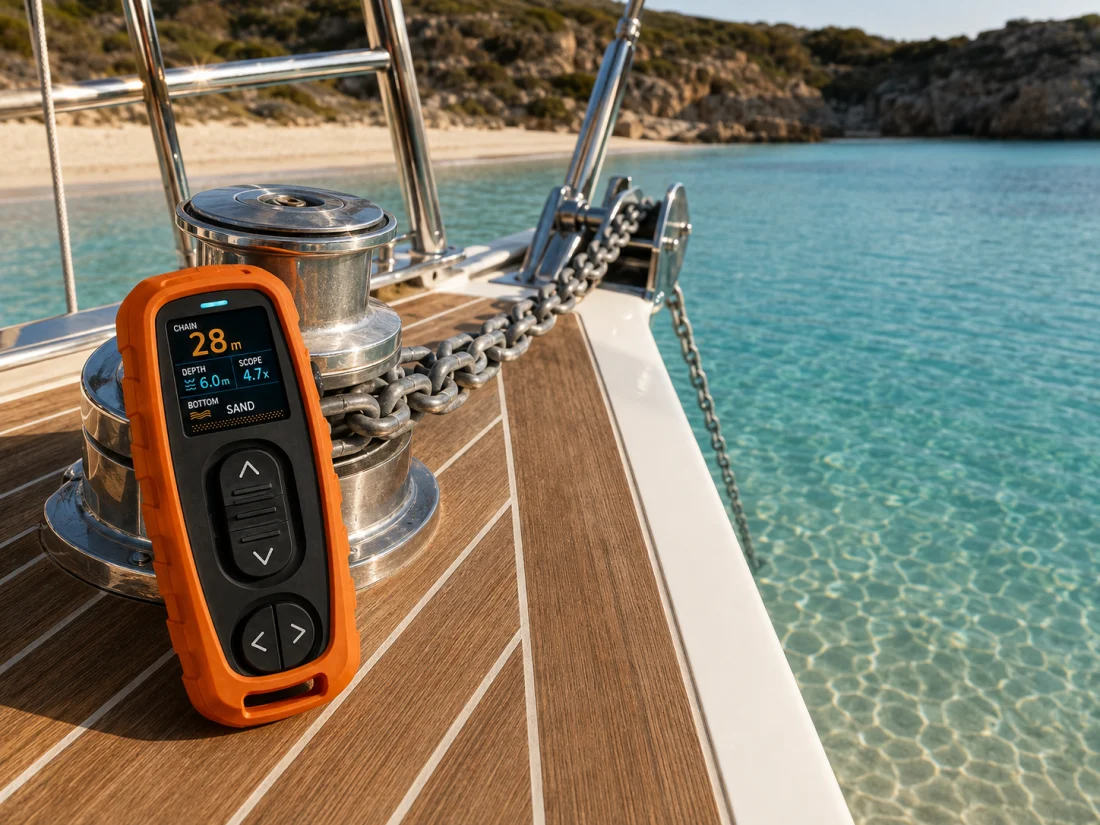
A wireless handheld and base station for anchoring. Chain length, depth, scope and seabed context sit together, while the original footswitches and wired controls remain available.

Discuss compatibility ↗
Existing handheld concept visual · development hardware

HOW IT WORKS

01

Command at the bow

Distinct physical controls for windlass and bow thruster.

02

Measure the movement

Chain count follows movement from the handheld or the boat’s original controls.

03

Share with Telltale

Measured chain length can feed the anchor watch and voyage log.

Development & evidence

An additional control path.

The proposed architecture preserves the boat’s original controls. The fitted trial must verify command response, chain count and coexistence across both control paths. Standalone operation does not require an app or server.

In development. Fitted acceptance testing remains part of the release work.

PROPOSED CONTROL PATH

01HANDHELD
02BASE STATION
03WINDLASS
04CHAIN SENSOR

Original wired controls → windlass
Independent command path remains available.

Marine hardware / Machine vision

Lookout

Prototype

Turn a masthead view
into a position on the chart.

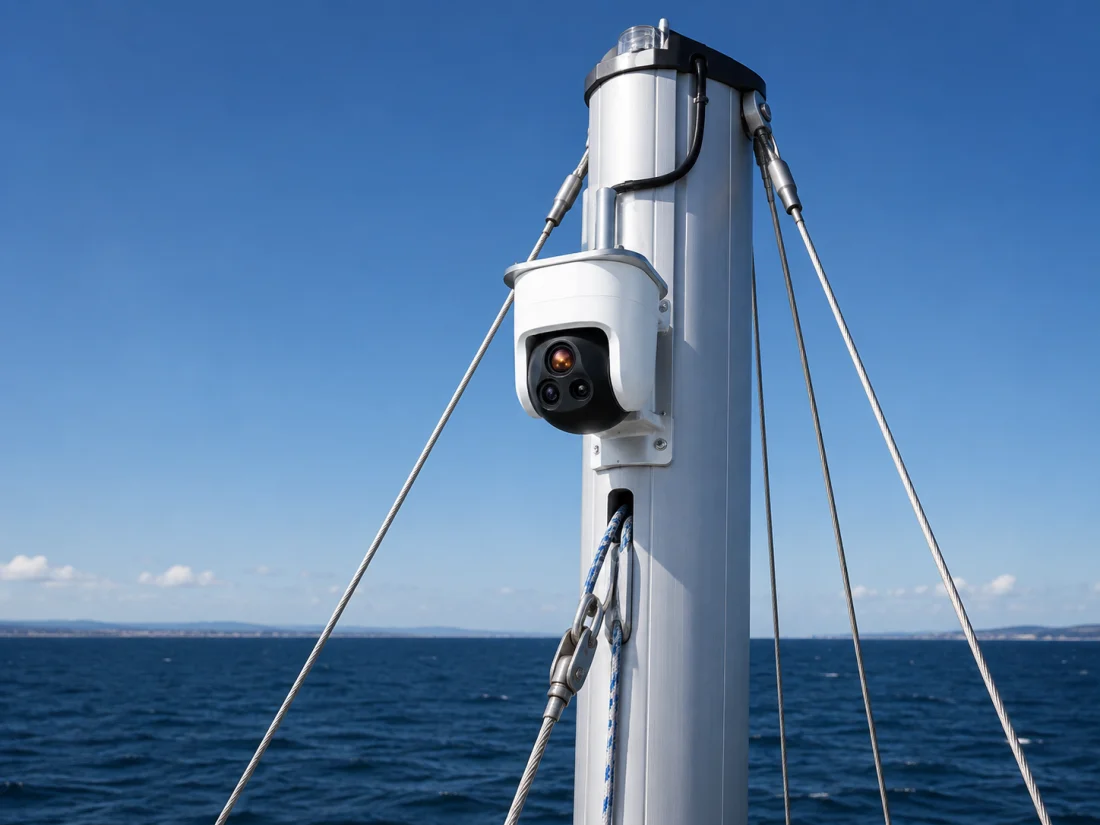
A stabilised thermal and daylight camera concept. Combine viewing angles with mast height and vessel attitude to estimate where a water-level contact lies.

Discuss the prototype ↗
Existing pod concept visual · not a fitted-unit photograph

HOW IT WORKS

01

Observe

Thermal and daylight imagery from a stabilised masthead pod.

02

Resolve the geometry

Mast height and corrected viewing angle estimate water-level range.

03

Connect the chart

Telltale supplies heading, position and attitude for chart-referenced contacts.

Development & evidence

Make the geometry and its limits visible.

Passive ranging depends on the contact being at water level and on the accuracy of height and viewing angle. A near-horizontal sightline is particularly sensitive to angle error. The proposed laser rangefinder provides another measurement at suitable ranges.

Prototype programme. Published specifications are design targets until verified on a fitted unit.

MEASUREMENT CHAIN

01MAST HEIGHT
02CORRECTED ANGLE
03WATER-LEVEL RANGE
04CHART POSITION

r = h / tan(α)
Idealised water-level geometry, after attitude correction.

Joint development / Myto AG

EvenKeel

Prototype

Joint research,
before a public specification.

An early-stage product developed with Myto AG. The work is independent of Telltale. Product features and release timing have not been announced.

Contact the lab ↗

SYSTEM OVERVIEW

01RESEARCH QUESTION
02JOINT PROTOTYPE
03OBSERVATION
04SPECIFICATION

Inputs and assumptions remain attached to the result.

Development sequence · no product specification implied

HOW IT WORKS

01

Define the question

Establish the problem and the evidence needed.

02

Build the prototype

Test the proposed approach with the development partner.

03

Publish what is supported

Release a specification when the evidence is ready.

Development & evidence

Keep the public claims proportionate.

EvenKeel has its own development programme. This page provides a clear status and contact route without filling the gaps with speculative features.

Prototype with Myto AG. No public release date.

Collections, projects & making

Curio Studio

Available

Keep the things you make
connected to what you learn.

A personal studio for the things you make, collect and discover. Keep projects, field trips, specimens, sightings, photographs and shared supplies connected.

View on the App Store ↗Get it on Google Play ↗Curious? Explore Curio Studio ↗

Version 2.0 · Release preview

Out into the world. Back to your studio.

The next release brings Curio Key (Beta) for fossils, rocks, minerals and gems; field trips and numbered catalogues; bird-watching outings and diving sightings; equipment service records; a redesigned interface; and illustrated stories across your Curios.

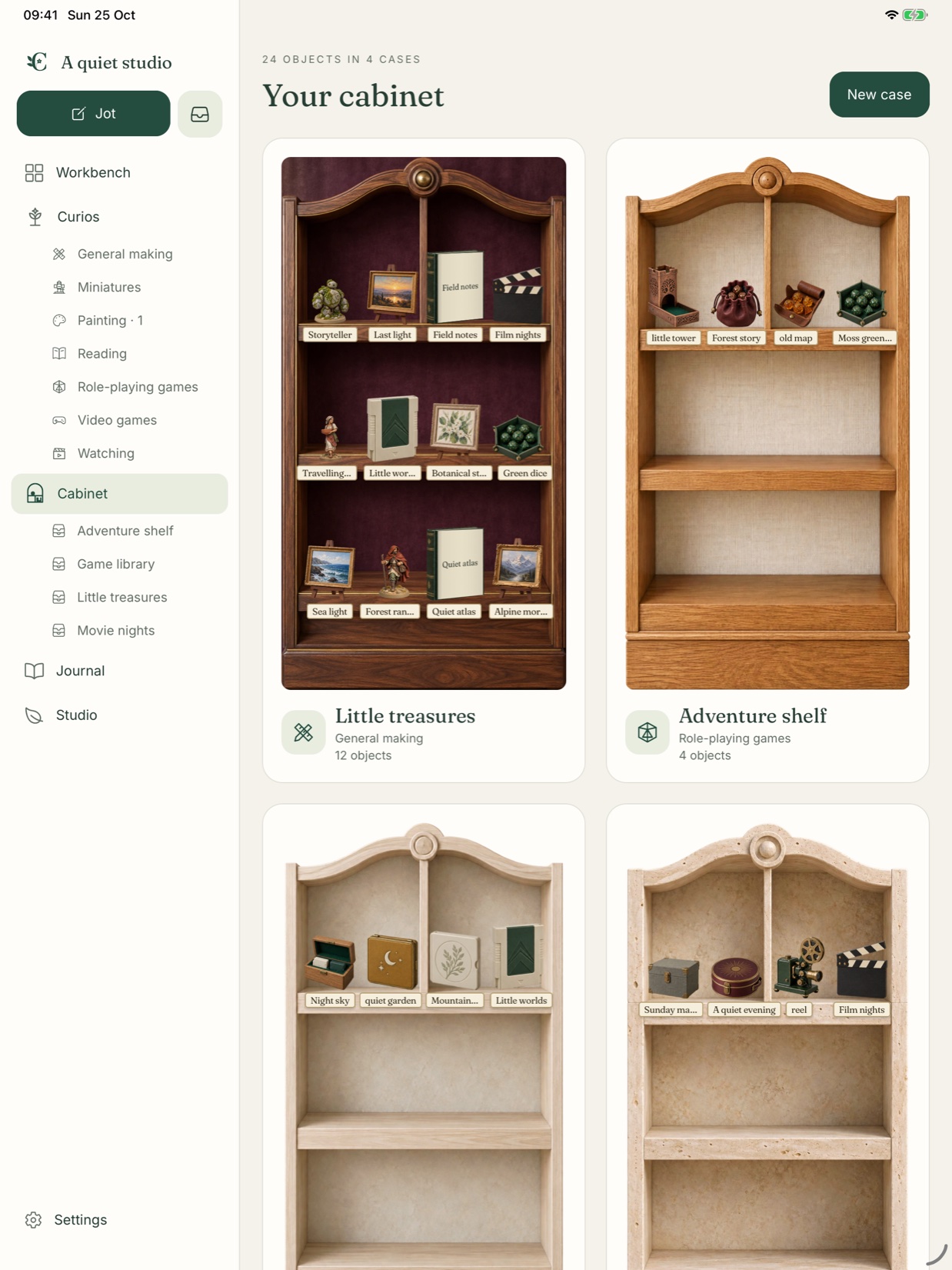
Curio Studio cabinet ipad
Earlier iPad cabinet capture with fictional collections. The 2.0 stories show the new workflows.

HOW IT WORKS

Development & evidence

Your studio lives on your device.

Your records are kept on your device. Curio Key sends only the photographs and evidence you select when you request an investigation. Optional iCloud sync connects Apple devices; complete backup exports also help you move to Android. Read the updated guide and privacy policy for the details.

Available on iPhone, iPad and Android. Version 2.0 is being prepared for the stores; check your store for the currently approved version.

Sticky notes / iPhone

Jotlings

On the App Store · coming soon to Android

Sticky notes,
each with a paper companion.

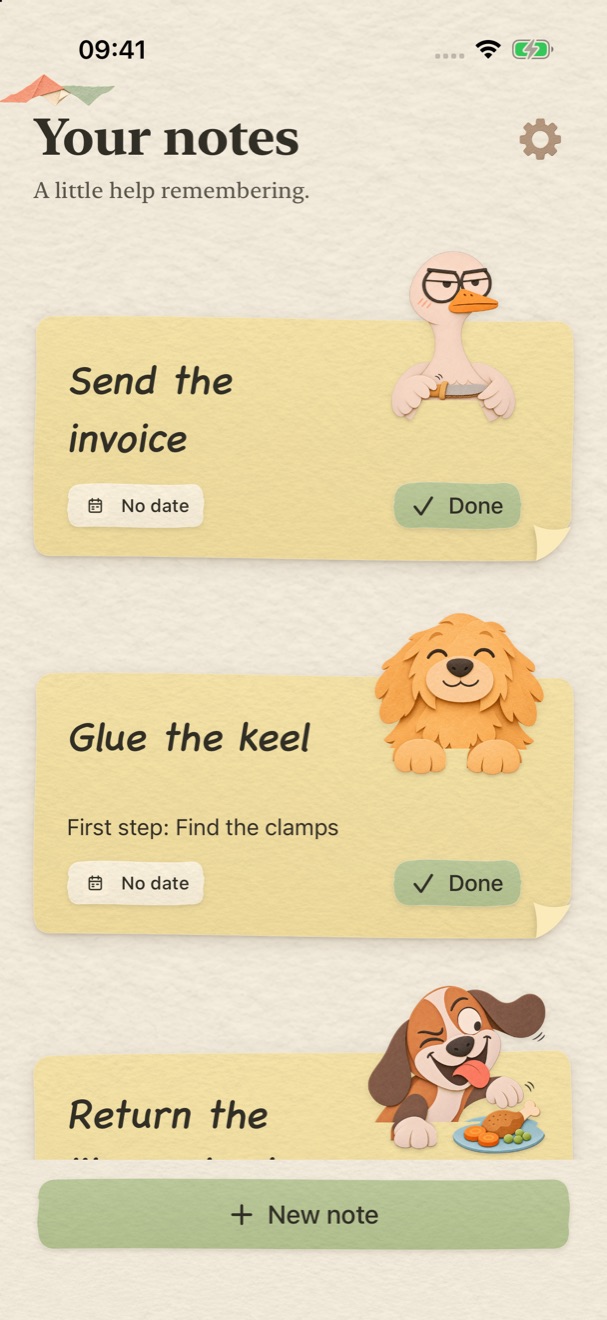
Jotlings is a free sticky-note app for iPhone. Each small note has one of seven handmade paper companions. A note can simply stay where it is, develop personality as it ages, or become more expressive as its deadline nears. Reminders are set separately, so a companion can grow louder without sending more alerts.

View on the App Store ↗
Jotlings on iPhone: the note board, with example notes

HOW IT WORKS

01

Write the note

A title, an optional first step and an optional date.

02

Choose a companion

Seven paper companions, from a calm goldfish to a goose with opinions.

03

Keep it in view

Home Screen and Lock Screen widgets, with Done and Later on the note.

Development & evidence

Your notes stay on your iPhone.

Notes are kept on the device. There are no accounts, purchases, subscriptions or advertising. Jotlings can link a note with an item in Curio Studio when both apps are installed; that is optional, and Jotlings works fully without it.

Free on the App Store for iPhone. Coming soon to Android.

The complete portfolio

Products

Software, research, hardware and games. Each product has its own purpose, evidence and development status.

WAYFARER LABSGAMES◆ ◆ ◆

Paper worlds.
Decisions with consequences.

Explore three games in development. See how each one plays and ask about joining the beta.

Illustrated key art above. Each game page includes a development gameplay capture.

Sailing survivor roguelite / Public TestFlight beta

Paper Tides

Sail, fight and bring
your ship home.

Steer a paper ship through enemy fleets, line up broadsides and turn salvage into a vessel worth bringing home. Wind, tide and depth give the paper world a physical foundation.

Ask about the beta ↗
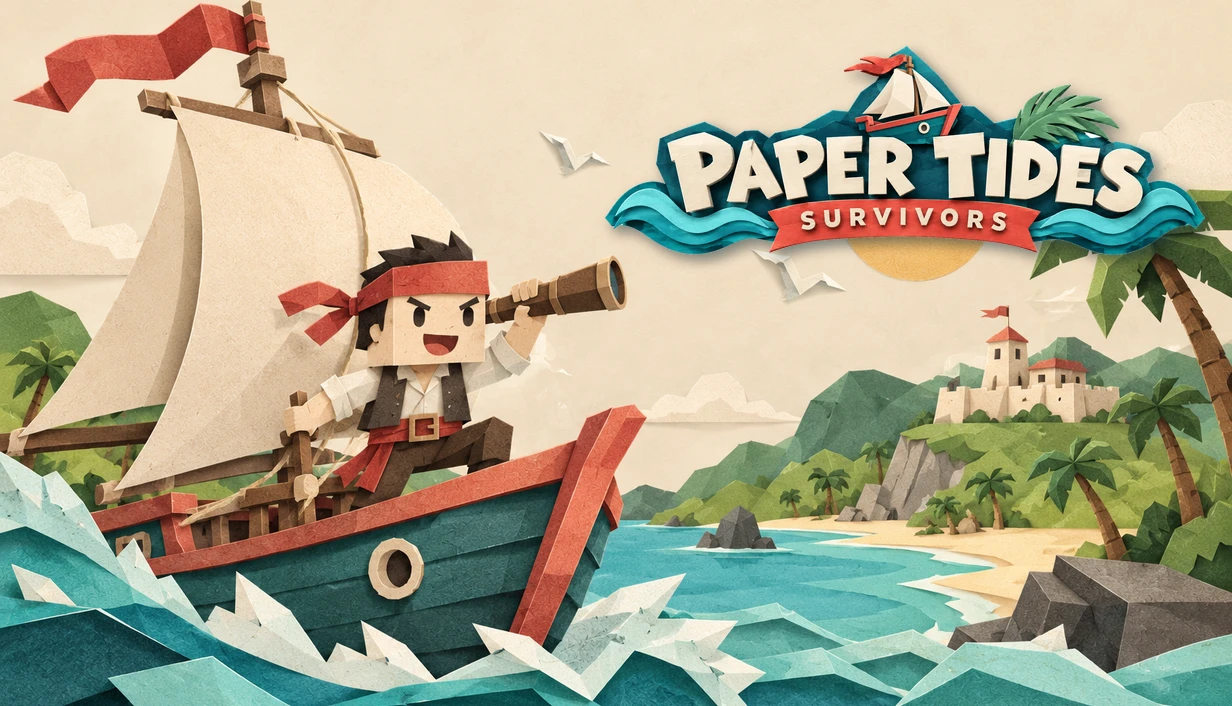
Paper Tides illustrated key art
01 / PLAY

Position the ship

Steer through the fight while the cannons fire.

02 / PLAY

Build the vessel

Combine weapons, captain choices and refits.

03 / PLAY

Return to harbour

Bank your haul and prepare for the next expedition.

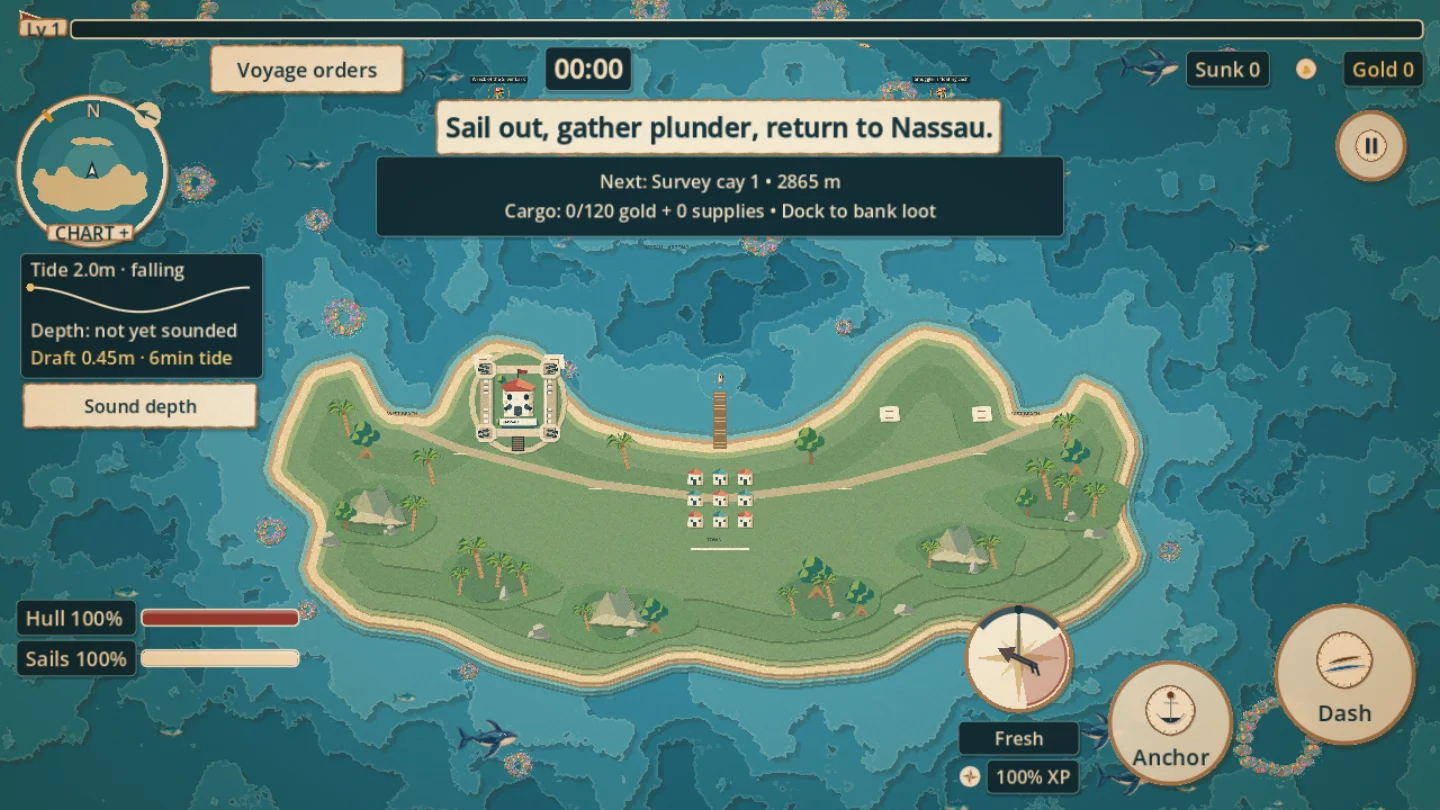
Paper Tides development gameplay capture
Development gameplay capture from the live product page. Artwork, interface and balance may change.

iPhone and iPad beta. Steam for Windows, Steam Deck and Linux is planned.

Beta help →

Workplace survivor roguelite / TestFlight testing

Corporate Survivors

Find a desk.
Finish the assignment.
Survive the interruptions.

Fight through micromanagers and office chaos, then hold a quiet desk long enough to do useful work. Your personal attacks pause while you work, so every productive moment has a cost.

Ask about the beta ↗
Corporate Survivors illustrated key art
01 / PLAY

Fight for space

Clear a route through the office.

02 / PLAY

Work under pressure

Reach the required workstations and complete the assignment.

03 / PLAY

Choose when to leave

Make the exit or risk a little overtime.

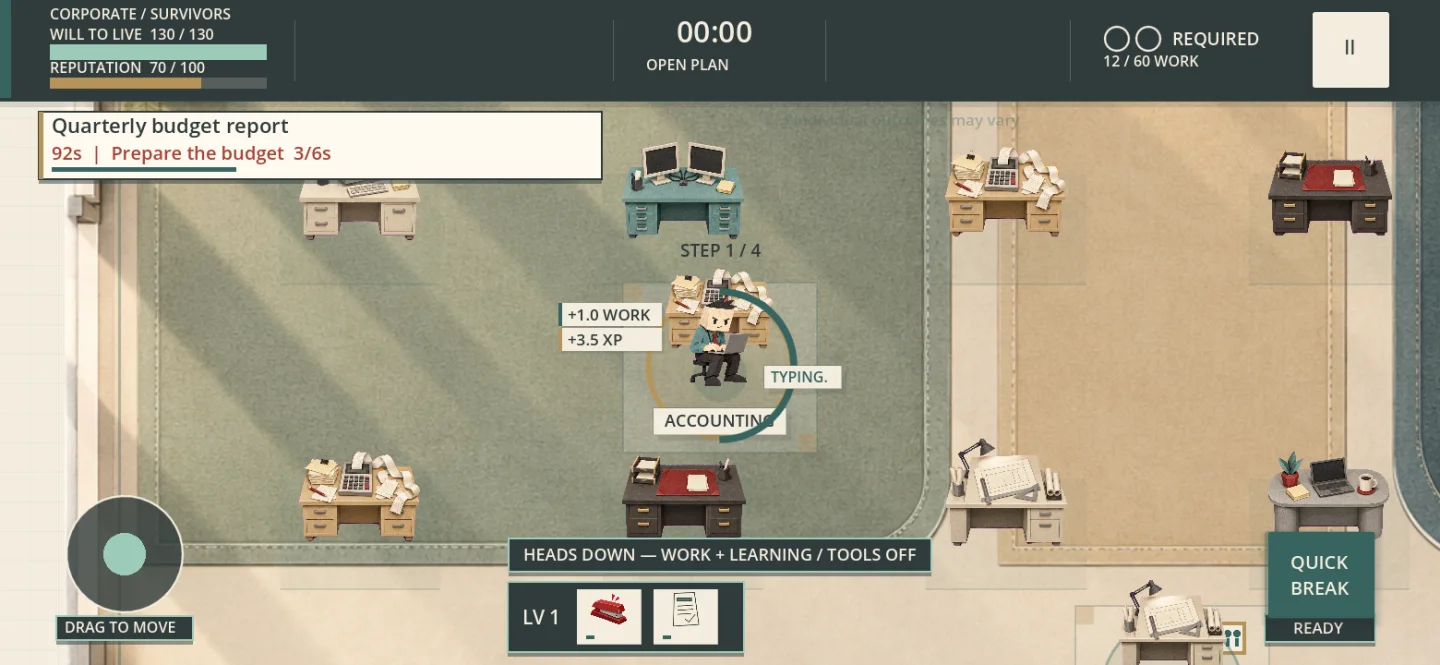
Corporate Survivors development gameplay capture
Development gameplay capture from the live product page. Artwork, interface and balance may change.

iPhone beta. PC and Steam Deck are planned.

Beta help →

Lane defence with movable formations / TestFlight testing

Dead End Department

Move the desks.
Change the defence.

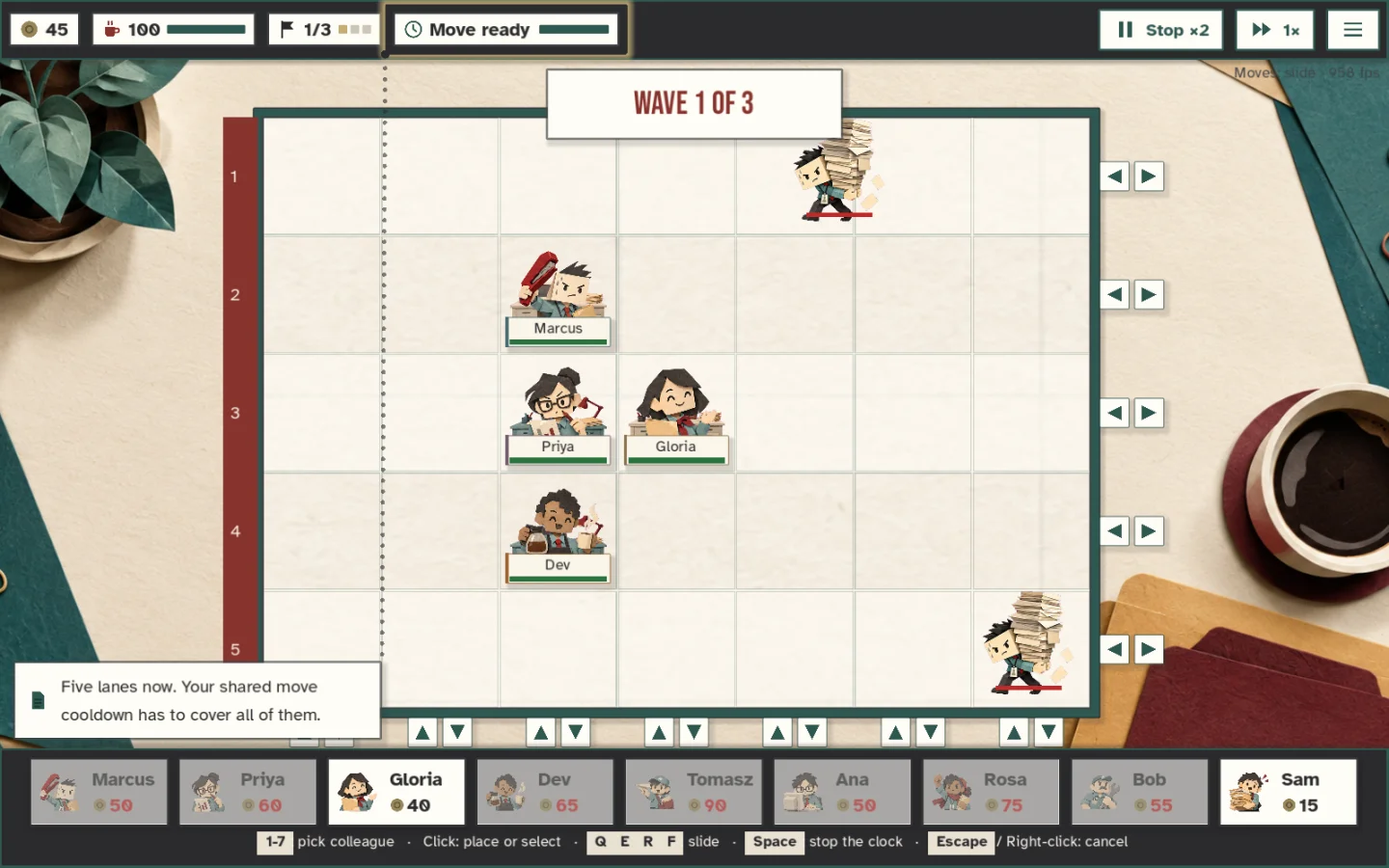
Build a team and rearrange its formation as management changes the battlefield. Moving one colleague can rescue a lane, restore a useful bond or expose the rest of the office.

Ask about the beta ↗
Dead End Department illustrated key art
01 / PLAY

Read the lanes

Inspect the incoming threats and available budget.

02 / PLAY

Build relationships

Choose colleagues and neighbours that work together.

03 / PLAY

Rearrange the team

Move desks with a shared cooldown. Every rescue creates a tradeoff.

Dead End Department development gameplay capture
Development gameplay capture from the live product page. Artwork, interface and balance may change.

iPhone beta, with PC and Steam Deck development in progress.

Beta help →

Wayfarer Labs / Methods across the portfolio

How our models and
systems are tested

We work across numerical simulation, machine learning, sensing and embedded control. In each case we represent the system carefully, keep the evidence behind each output, and test it against the conditions it will encounter.

01 / INFORMATION & TIMING

What could the model know?

  • Use only information available at the decision time.
  • Keep forecast issue time separate from the time being predicted.
  • Exclude later results and revisions from historical inputs.
Race-time features · Forecast run and lead
02 / PHYSICS & LEARNING

What governs the behaviour?

  • Physical models describe mechanisms, from coastal wind to thermal inertia.
  • Learned relationships capture patterns in observations.
  • Check where each approach stops being reliable.
Coastal wind · Runner probabilities · Thermal response
03 / ERROR PROPAGATION

Where does uncertainty grow?

  • Near the horizon, a small camera-angle error can create a large range error.
  • Wind error changes boat speed and arrival time.
  • That timing change alters the weather encountered next.
Contact geometry · Time-dependent routing
04 / INDEPENDENT EVIDENCE

Does it hold up elsewhere?

  • Test later races, different terrain and changing loads.
  • Compare against a simpler baseline.
  • Inspect failure cases and conditions, not just an average score.
Chronological evaluation · Regime-specific error

Telltale / Available · tested on 19 coasts

Local wind, sea and risks.
A route for the boat.

Wind, sea and risk forecasts · Weather routing

Telltale runs on Topotrope, a physics engine for wind, sea and weather near the coast. Telltale shows its forecast beside the leading global and regional models, checks it against measured wind and uses it to plan passages and choose anchorages.

FORECAST

What it forecasts

Wind, gusts, waves and weather for the coast you are on, hour by hour.

RISKS

What it looks for

Places and hours where several things combine into a risk: gusts, squalls, fronts and thunderstorms.

PASSAGE

What it is used for

Routes are calculated for your boat on several models, so arrival time is given as a range. An anchorage can be assessed before you get there.

TESTING

How it is tested

The wind at a weather station’s position, at the same hour, from two sources: the weather model on its own, and Topotrope run on that model. Both are compared with what the station’s anemometer measured. A change to the engine is kept only if it also holds up on coasts that were not used to make it.

19

coasts tested

159

weather stations with scored data

4.3 million

forecast values compared with a measurement

Scope, limitations and evidence status +

Wind and waves are model estimates, not observations. The risk layers are guidance, not warnings, and have not been tested against measurements as fully as the wind has. Use official forecasts and what you can see alongside them.

Three-hourly data, 2014 to 2025. Wind speed error was smaller on 7 coasts, within 0.1 knot on 10 and larger on 2, eastern Australia and California. Gust forecasts are weaker than speed and direction.

Results for all 19 coasts, with methods →

Dataset complexity & scale

What the published
counts mean

A weather forecast, a race-history table and a stream of camera frames pose different problems. Volume matters alongside resolution, coverage, information timing, missingness and the independence of observations.

We distinguish source coverage, data actually processed, training samples and independent evaluation samples. Each published figure should carry its period, configuration and purpose.

Actual product capture with demonstration data. Historical interface, not a live forecast.